1. Do you think
topics that center on "frustration with official power" and
"attraction for mass media fantasies would differ in rural communities
from those that inner-city teenagers focus on? How? Give some examples.
Topics would definitely differ in a rural setting. I teach a lot of children that live “in the
middle of nowhere” in Greenbrier county.
Many of these students have little exposure to “police brutality” and
they do not like hip-hop. They’re into hunting, farming, and country
music. Luckily, the crime-rate is very
low in south-eastern WV so youth crime and violence would probably not be a
topic of concern.
2. How do traditional
social institutions and mass media work to silence inner-city kids?
They seek to maximize social control by constructing African
American and Latino teenagers as criminals and superpredators, and then
punishing their acts of defiance. Pop
culture seeks to maximize profits by naming them as hip-hop performers and
trendsetters, and then co-opting their culture of defiance
3. What is your
reaction to the statistics presented under the heading "And Justice For
Some?" Do you think the system in intentionally organized to disadvantage
urban youth of color?
I was shocked by the statistics and felt as though African
Americans were at a disadvantage from the start. I do not believe that the system is
intentionally organized to disadvantage urban youth of color; I believe a long time cycle of poverty dating
back to a time before Civil Rights is at play here. I think it is important for “the system” to
rid stereotypes and promote positive programs for urban youth of color.
4. Link to an
advertisement or commercial that you consider to be influenced by hip-hop
culture?
By the way, here are lyrices to one of Lil Wayne's songs. This is how we dew?
5. What dangers to
young people do you see in the relentless marketing of "cool" ?
The hip-hop culture draw upon street and prison experiences. It portrays that these things make you “tough”
and “cool.” Young people can see the
rich and famous individuals of the hip-hop culture consider that as
success. They may think that that
lifestyle can bring them success.
6. What is your
reaction to the research that shows youth violence in decline? Do you still
think that is the trend in 2012? Find some statistics to support your answer?
I feel that I can see that it is on the decline. I do see more “anti-violence” programs being promoted. I also feel that I am seeing/hearing more
about successful and educated minorities and it is also seen as being “cool.”

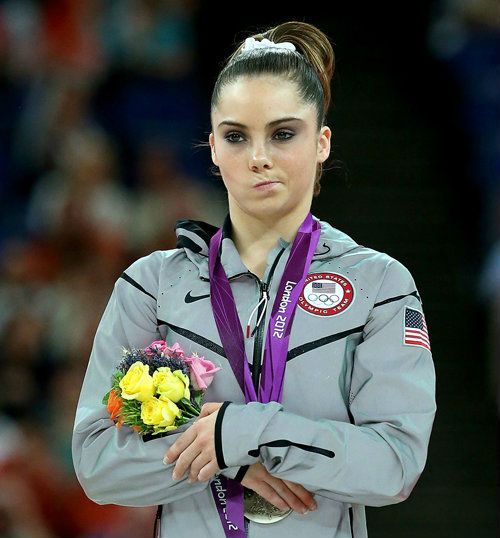
photo citation:
http://ww4.hdnux.com/photos/07/75/25/2086251/7/628x471.jpg
7. Why is it
important to let youth speak for themselves and their voices to be heard?
Speaking for themselves about their own lived experiences,
inner-city youth offer an important alternative outside the dominant frame of
consumption and crime.
8. What prevents
Urban Youth from articulating their own lived experiences in ways that might be
productive? Do you think this is problematic in rural areas like West Virginia?
Do you think rural youth are victimized by mass media in ways that are
different than Urban youth? How?
The language gap. A low income kindergartener has heard only
half the words and can understand only half the meanings and language
conventions of a high-income child. A
person needs to know about 95% of the words he or she hears or reads in order
to understand language gap. I do believe
this is problematic in rural areas like West Virginia. The socioeconomic status of a child’s family
is a more important predictor of academic achievement than the school he or she
attends. In WV, we have several students
with low socioeconomic statuses.
9. According to the
author, what is the best way to address the literacy challenge?
Apply multiple literacies in teaching. The electronic media is becoming a big role
in our lives, thus it needs included in instruction.
10. Why is the skill
and drill approach to literacy instruction ineffective?
This uses vocabulary from the white middle class. Instruction needs to be more culturally responsive. Teach by learning cultural experiences. Kids need to have a sense of rootedness in
place in time. They need more opportunities
for new experiences, facilitated by teachers, outside of school, in local
communities and elsewhere.
11. What should
schools offer to improve literacy instruction for Urban Youth? Do you think
this strategy would also benefit student of the Appalachia region whose
literacy rates are similar to those of youth in the inner-city?
Have more learning experiences with community involvement so
the Urban Youth can have that sense of “rootedness.” This could work in the Appalachia region with
literacy rates similar.
12. How is the
process of reading changed by media?
Reading now goes beyond print.
13. According to the
author how might the imbalance between inner-city kids strong command of oral
and visual language be used to improve print-based language? Do you think this
would also work for low-literacy kids in the Appalachia region?
Bringing a deeper understanding of media languages, in all
their richness and complexity, to the process of teaching and learning might
just go a long way toward overcoming this imbalance and bridge the language gap.